Russian Revolution
M: Son of the CenturyThe Russian Revolution is presented less through an account of events in Russia than through its powerful and contested afterlife in Italy. It becomes a standard by which Italian socialists measure their ambitions, a model for proposed councils and party transformation, and a source of authority invoked by both revolutionaries and their critics. Yet the contacts that Nicola Bombacci hopes will turn that model into practical support reveal a sharp limit: Moscow’s representatives are chiefly concerned with relations between states, while the Italian revolutionary current is divided and uncertain.
Revolution as a model
At a Socialist Party congress in Bologna in early October, the maximalist majority adopted a platform inspired by the Russian Revolution, which it celebrated as a historic turning point for the proletariat. The congress revised the party’s longstanding program and appointed Bombacci secretary, placing him at the center of a movement that claimed to prepare an Italian transformation on the Russian example. The image attached to this project was the Hammer and sickle, encircled by ears of corn: a sign of a world remade through proletarian power, presented as both new and continuous with history.
That emblematic confidence stood beside a practical hesitation. Bombacci, known as the Christ of the Workers, addressed immense crowds and was expected by some revolutionaries to lead the Italian movement toward a Soviet republic. But the book stresses that he hesitated to call for revolution. Socialist leaders disagreed about whether violence was historically necessary, whether the moment was ready, or whether attempting an uprising would invite defeat. The warning that the hammer and sickle could not frighten the dagger condensed the central disparity: revolutionary symbols and declarations confronted opponents whose experience of violence was more immediate and whose organization was better armed.
The appeal of the Russian model was not confined to a slogan or a single congress. At a Socialist Party national council in Florence on January 11, 1920, Bombacci urged the immediate creation of soviets, or councils modeled on those in Russia. His proposal received 401 votes out of 440, a decisive showing that nevertheless did not settle the leadership’s doubts. Palmiro Togliatti regarded Italian councils as a premature and inadequate imitation, reducing them to a shadow of the Russian example. The episode captures the movement’s contradiction: strong popular and organizational support for socialist politics did not mean agreement on how, or whether, to reproduce the Russian path.
Bombacci’s mission to Soviet representatives
Bombacci’s commitment to the revolution led him to work for the reopening of diplomatic relations between Italy and Lenin’s Russia. In late March 1920 he traveled to Copenhagen as part of a delegation officially arranged through the National League of Cooperatives and backed by the government of Francesco Saverio Nitti. The arrangement was paradoxical: the government lent support to a mission involving socialists who openly sought to subvert it. For Bombacci, however, diplomacy offered a possible opening to a larger purpose. He wanted recognition of Soviet Russia to become a first step toward an Italian revolution and hoped to discuss that prospect directly with people who had made a revolution themselves.
The meetings exposed the different purposes of the Italian delegation and its Soviet interlocutors. Leonid Krasin, responsible for revolutionary Russia’s foreign trade, told the delegation that his mandate was to secure official Italian recognition of Moscow. He had no comparable undertaking to advance revolution in Italy. Bombacci therefore put his hopes in Maksim Litvinov, a senior Soviet representative whom he expected to understand the Italian revolutionary cause. Their meeting instead brought a blunt assessment: the Italian Socialist Party was strong, but its revolutionary faction was weak, and socialists in power would not last. The encounter turned Bombacci’s hoped-for confirmation into a warning about the distance between the party’s strength and its readiness to govern.
Litvinov also identified the Soviet government’s immediate priority as the resumption of political and commercial relations with capitalist countries. The book thus distinguishes the successful Russian Revolution from the work now confronting the revolutionary state: maintaining and restoring relations abroad. For Bombacci, Moscow had embodied a living precedent; for its representatives, recognition and practical state relations came first. The distinction did not erase the revolution’s influence, but it denied him the assurance that Italian upheaval would be an urgent Soviet objective.
Pressure, division, and political consequence
The Comintern’s demands brought the Russian example into direct conflict with the Italian party’s unity. At the January 1921 congress in Livorno, delegates confronted 21 conditions set by the Communist International. These required the Italian party to change its name and reject as counterrevolutionaries those socialists who supported socialism without accepting revolution. The demand sharpened a division already visible between communists, centrists, and reformists. Bombacci and his supporters still believed in revolutionary action, while many of the maximalists led by Giacinto Menotti Serrati no longer accepted it in practice, even as they continued to use revolutionary language.
A Comintern delegate, Christo Kabakciev, presented the choice as an ultimatum: those who supported the maximalists’ motion for unity would face expulsion from the International. Bombacci and the communists applauded; other parts of the theater answered with mockery and protests against outside authority. The dispute was not simply over reverence for the Russian Revolution. It concerned who could define legitimate socialism in Italy, whether international discipline outweighed party cohesion, and whether revolutionary allegiance required a break with reformists. The revolution’s authority, invoked as a model, therefore became a force dividing the movement that hoped to learn from it.
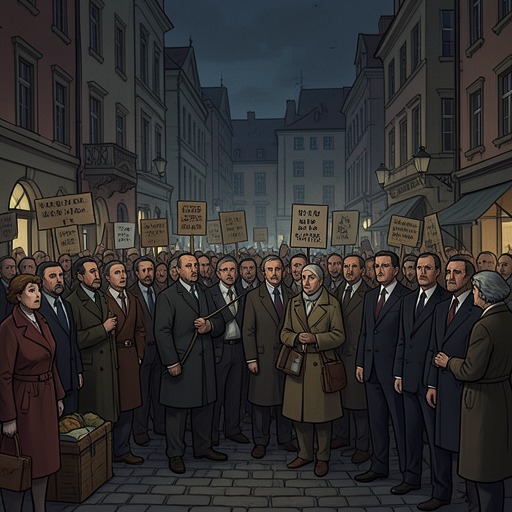
The book also places Russian revolutionary imagery in Italian public life beyond party congresses. At a socialist gathering in Milan, women at the head of a procession carried a portrait of Lenin alongside a red flag, while calling for a better life for their children. In Bologna, after the new socialist mayor Enio Gnudi addressed a crowd beneath red flags, released doves circled over socialists and fascists alike. These details show how the revolution’s symbols entered processions and civic ceremonies, where they gave visible form to collective political hopes even as opposing forces contested the same public space.
The limits of the example
The Russian Revolution’s importance in this account rests on a persistent tension between symbolic power and political capacity. It gave Italian socialists a successful precedent, a vocabulary of workers’ rule, and an organizational model. It also intensified arguments about timing, violence, international allegiance, and the limits of parliamentary politics. Bombacci’s mission made the tension personal: he sought recognition of Soviet Russia partly because he hoped to discuss Italy’s future, only to learn that the Soviet representatives’ urgent concerns lay elsewhere.
The result is neither the disappearance of the Russian example nor its straightforward adoption. Its influence is visible in party programs, proposals for soviets, Lenin’s portrait in a procession, and the Comintern’s demands. But those forms of influence meet Italian conditions that the text repeatedly marks as unsettled: a divided party, disagreement over action, and revolutionary expectations that do not themselves guarantee a revolution. The Russian Revolution remains a point of orientation—and a measure of the gap between what Italian socialists proclaimed and what they could agree to do.